

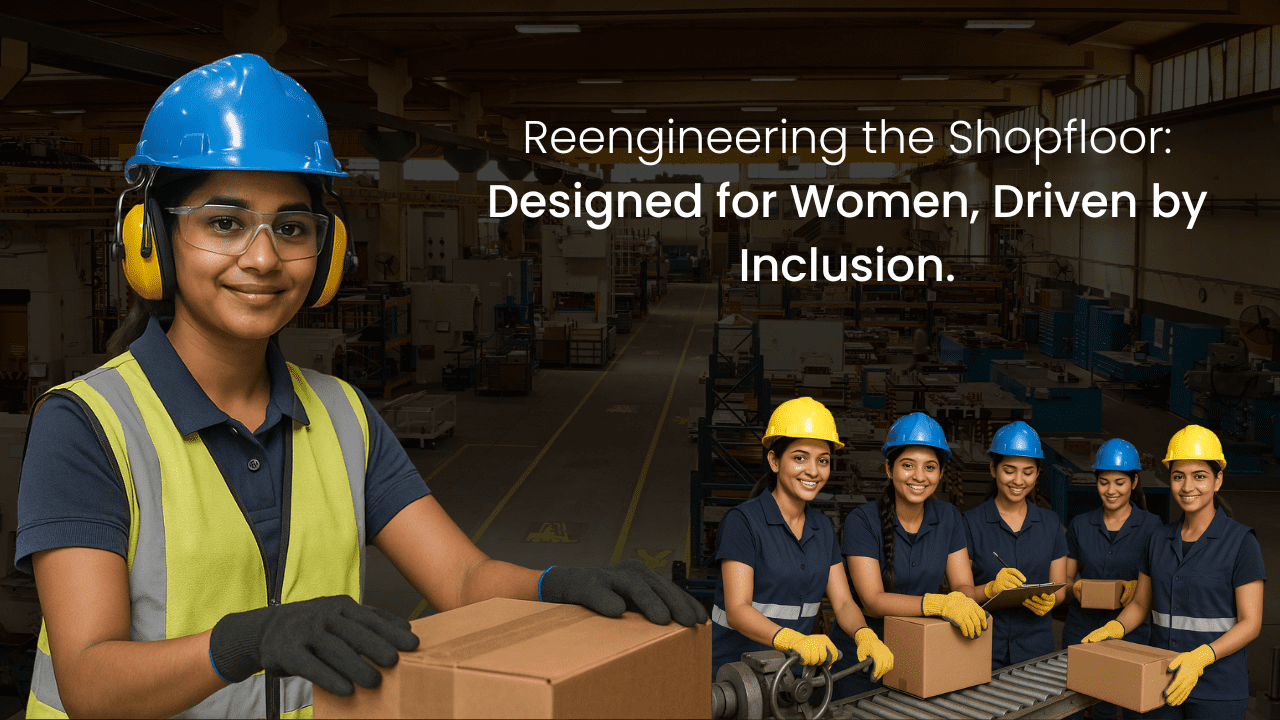
Women Build the Future: Reimagining Inclusive Shopfloors
A young woman, in her first week at work, walks in a little nervous — unsure if she’ll be accepted, if she’ll be safe, if she’ll be heard. But when she finds a workplace that’s built with her in mind — where facilities, policies, and people all support her growth — that nervousness turns into confidence.
And that confidence? It translates into lower absenteeism, better retention, higher productivity — and a stronger brand reputation for the company.
Designing shopfloor roles for women that are safe, compliant, and genuinely supportive isn’t just about meeting legal norms — it’s about building a workplace culture that works for everyone.
Because India’s legal framework already protects women’s safety, dignity, maternity needs, and fair work conditions — doing it right isn’t just the law, it’s smart business and the right thing to do.

Why this matters
When more women participate in factories and warehouses, businesses become more resilient and find it easier to build stable teams in roles that often face hiring gaps and high churn. Moreover, when employers invest in visible basics-like better facilities, safer processes, and clear, fair policies-workers quickly translate that trust into higher attendance and longer tenures across shifts.
Importantly, partners like Meraqui can turn these good intentions into on-ground execution with digital onboarding, accurate payroll, and compliance tracking across many states and cities in India.
Compliance Foundations
- POSH Act, 2013: Mandatory Internal Complaints Committee (ICC) for establishments with 10+ employees, regular training, policy publication, and timely case resolution. Penalties apply for non-compliance.
- Maternity Benefit (Amendment) Act, 2017: 26 weeks of paid leave, coverage for adoptive and commissioning mothers, and compulsory crèche facilities for establishments employing 50+ workers.
Government clarifications further explain how to implement crèche provisions and timelines, which helps employers roll out consistent audits and support.
Night Shifts and Safety
- While earlier laws restricted night work for women, many states now allow it under strict safeguards — written consent, secure transport, food availability, group deployment, and reinforced preventive measures.
- Employers must ensure transport with GPS tracking, trained female security, and safe, well-lit premises. State-specific updates continue to expand such opportunities while strengthening safety norms.
Building Safe, Trusted Facilities
True trust begins with the essentials — clean, well-lit toilets, private changing spaces, reliable water and hygiene access. As teams grow, dedicated lactation rooms and nearby crèches become vital, especially for multi-shift operations.
Marked pathways, visible CCTV coverage, trained security personnel, and emergency protocols create a workplace where women feel confident and respected from entry to exit.

Ergonomic and Safe Job Design
Job safety starts with lawful, thoughtful design. Avoid hazardous processes, follow statutory weight limits, and install proper machine guards. Redesign repetitive or physically demanding tasks to reduce strain, and ensure clean shutdown procedures during maintenance.
Night-shift workplaces should include rest breaks and seating options — because comfort and safety go hand in hand with productivity.

PPE, uniforms, and comfort
Personal protective equipment and uniforms must be available in sizes that fit women properly so protection remains effective during material handling, chemical exposure, or dusty operations.
Because poor fit leads to workarounds and higher risk, supervisors should run short trials, invite feedback, and swap uncomfortable gear without delay. Treat these adjustments as part of routine safety audits so the team keeps learning and improving the standard kit over time.
Policies, training, and reporting
A clear POSH policy, a trained ICC, and regular awareness sessions for all shifts-including contractors and vendors-help teams understand rights, responsibilities, and respectful conduct. Multiple, confidential reporting channels with anti-retaliation guarantees increase the likelihood that issues will be raised early and resolved quickly.
Managers and floor leads should receive scenario-based training on day-to-day escalation, documentation, and state-specific night-shift rules so compliance lives in everyday practice.
Scheduling, transport, and attendance
Since predictability reduces stress, rosters should be shared in advance, last-minute changes minimized, and back-to-back shifts avoided to protect recovery time.
When women choose night work, written consent, safe point-to-point transport with GPS tracking, and periodic route reviews demonstrate care and compliance in action. Staggered breaks that keep group presence in both shopfloor and rest areas improve safety while keeping throughput steady.
Pay, benefits, and retention levers
Timely and accurate pay is a powerful trust signal, and pairing it with attendance-linked incentives and simple recognition programs lifts morale at relatively low cost. Moreover, maternity benefits, crèche access, and flexible return-to-work pathways reduce the chance of losing skilled operators in precision roles after childbirth.
Clear, transparent rules on overtime, leave, and shift swaps help reduce friction during peak logistics periods and keep absenteeism under control.
How Meraqui can help
- Meraqui’s integrated platform streamlines every stage — from digital onboarding and background checks to payroll and statutory compliance (PF, ESIC, TDS, etc.) — ensuring accuracy and accountability across multi-location operations.
- It transforms compliance from a burden to a business advantage, helping employers demonstrate care and competence in every detail, every shift.

The bottom line
When women feel secure, respected, and heard, they don’t just stay — they elevate performance and culture across the board. Embedding safety, dignity, and fairness into daily practice is the fastest route to stronger teams and a stronger brand.
And with Meraqui’s end-to-end workforce management, building that future becomes structured, compliant, and scalable — for organizations ready to lead responsibly and grow sustainably.

Leave a Reply