

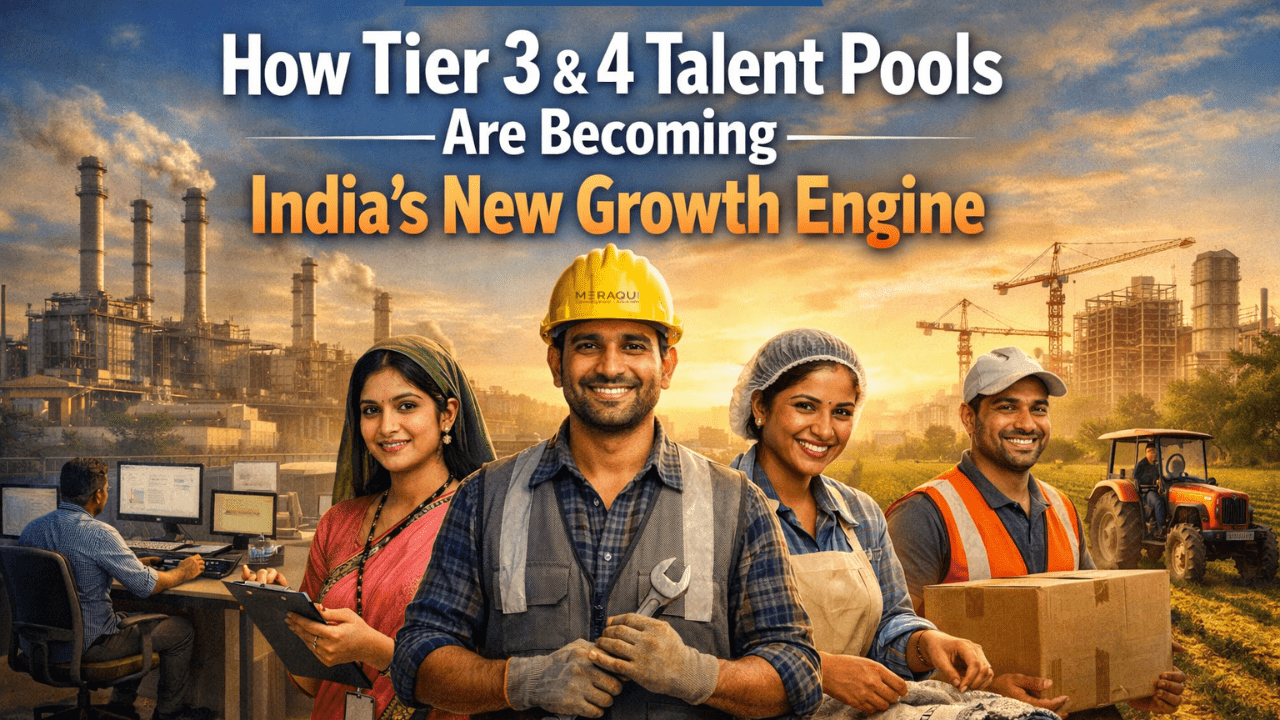
From Underrated to Unstoppable: How Tier 3 & 4 Talent Is Fueling India’s Growth
India’s economic landscape is quietly but powerfully shifting. For decades, the major metros like Mumbai, Delhi, Bangalore, and Chennai have been the engines of growth, magnets for talent, and hubs for industry and innovation. But the story is changing. The real growth story lies now in the Tier 3 and Tier 4 cities and towns across India. These smaller urban centers may not be as glamorous or crowded as the metros, but they have emerged as crucial talent pools that are supporting the next phase of India’s growth.

Tier 3 and Tier 4 cities are those with smaller populations and less developed infrastructure compared to metros, but they offer a deep reservoir of young, ambitious, and increasingly skilled workers. These cities, including places like Indore, Nagpur, Bhubaneswar, and even smaller towns, are now becoming the backbone of India’s manufacturing, IT services, logistics, and other sectors. They benefit from more affordable living costs, improving infrastructure, and better access to education and technology, allowing local talent to thrive without having to migrate long distances.
As India urbanizes and broadband connectivity expands, Tier 3 and 4 cities are flourished with new opportunities. Many companies are now deliberately sourcing, training, and hiring talent from these cities. This approach offers several competitive advantages, including reduction in attrition, significant cost savings, and access to highly loyal and motivated workforces that prefer to live close to home.
Why Tier 3 and 4 Cities Matter as Talent Sources
The biggest advantage of Tier 3-4 cities is the sheer size and availability of untapped talent, holding 51% of India’s MSMEs and a young, growing workforce. Education institutions, polytechnics, and vocational training centers have rapidly increased in numbers. Many young people are learning skills relevant to current industry demands, ranging from digital literacy and software development to machine operation and quality control.
Local governments and industry bodies have invested in improving infrastructure, such as roads, transport, and digital connectivity. This has made it easier to establish industrial corridors, IT parks, and logistics hubs. The growth of affordable housing and better urban amenities mean the workforce is more stable and less likely to churn.
In addition, the cost of living in Tier 3 and 4 cities is significantly lower, enabling businesses to offer competitive but affordable wages. This affordability translates not only to cost savings for companies but also better quality of life for employees, increasing satisfaction and reducing turnover risks.
Companies benefit from reduced absenteeism and higher workforce retention, as many workers prefer to stay close to their home region rather than move to expensive metros.

Key Sectors Driving Tier 3-4 Talent Demand
Tier 3 and 4 cities are attracting investments in core industries that align with India’s economic growth strategy. Manufacturing hubs flourish in smaller cities with access to raw materials and a trained workforce. These industries include automobile parts, consumer goods, textiles, and electronics assembly.
Logistics and warehousing have also expanded as e-commerce booms across India. These sectors need large blue-collar workforces that can be sourced locally. Additionally, the expanding IT and digital services industry is decentralizing, establishing service and development centers in smaller cities to leverage lower costs and emerging tech talent.
Sectors like defence manufacturing, semiconductor assembly, and renewable energy have created specialized pockets of employment with high potential for growth. The talent in these fields is steadily being developed through targeted government initiatives and partnerships with private providers, including tech-enabled workforce platforms.
Meraqui and karam.ai: The Bridge to Tier 3-4 Talent
Finding and managing talent in these cities, however, requires a new set of skills and technology. This is where companies like Meraqui come in. We specialize in connecting businesses with these emerging talent pools efficiently and reliably. Our platform extends its reach across dozens of Tier 3 and 4 cities, sourcing verified candidates and managing their end-to-end workforce lifecycle.
Powered by karam.ai, an AI-driven workforce management tool, Meraqui enables companies to digitally handle recruitment, onboarding, attendance, payroll, and compliance from a single platform. This integration reduces errors, improves compliance, and enhances worker trust.
Our technology-driven approach enhances operational efficiencies and retention rates, ensuring a more stable and productive workforce. This is especially critical for roles that traditionally experience high churn, such as blue-collar manufacturing and logistics support staff.

Practical Benefits for Employers
Employers who engage Tier 3 and 4 talent experience tangible benefits:
Lower attrition and absenteeism: Local hires tend to stay longer due to family ties and lower relocation costs. The ability to monitor attendance in real-time through apps helps reduce absenteeism.
Cost-effective hiring: Beyond salary, associated costs like housing, transport, and supervision are lower, reducing overall operating costs.
Improved workforce reliability: Digitized workflows from recruitment to payroll create transparency, trust, and timely payments, improving morale and productivity.
Community impact and goodwill: Hiring locally helps companies build community relationships and contributes to regional economic development, bolstering brand reputation.
Potential Challenges and the Next Thing Ahead
While the growth of Tier 3 and 4 talent pools is promising, challenges remain. Skill gaps persist in specialized roles, and infrastructure deficiencies can hamper scaling. Language and cultural differences require tailored communication strategies. However, initiatives by governments paired with innovative private-sector platforms like Meraqui are actively addressing these hurdles.
Training programs focused on relevant hard skills, logistics support such as transport and housing, and financial wellness through early wage access are crucial enablers. With steady improvements, Tier 3 and 4 cities are poised to become the cornerstone of India’s inclusive growth.
Meraqui, powered by karam.ai, helps enterprises seamlessly source, manage, and retain talent across emerging India through a unified, tech-enabled workforce platform.
Partner with Meraqui to build your workforce where India’s growth truly begins

Leave a Reply